
Designing the system behind the experience
Working at Macquarie University to create a design system that made better digital experiences easier to build, scale and evolve.
OPPORTUNITY
The problem wasn't the interface. It was the system behind it. A university is an unusually complex digital ecosystem. Faculties, departments, researchers, marketers, content authors, designers and developers all contribute to the experience — each with different goals, priorities and levels of digital expertise. Without a shared system, every new page becomes another opportunity to reinvent the wheel.
So we reframed the challenge. Rather than asking:
“How do we make Macquarie's websites look consistent?”
We asked:
“How might we make good digital experiences easier for everyone to create?”
This shift changed the role of the design system from a library of UI components into something more fundamental: an organisational capability.
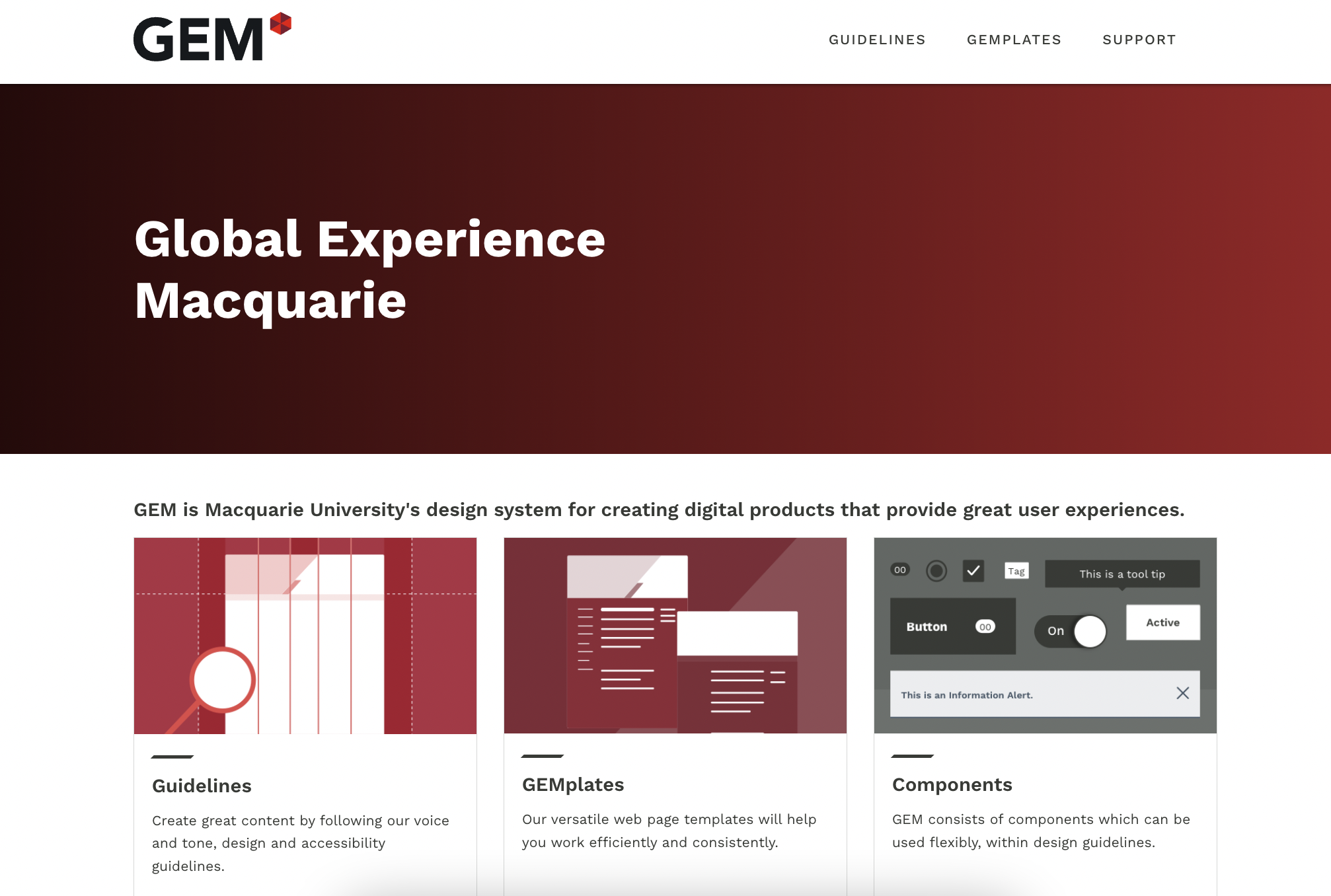
It brought together:
Components
Flexible building blocks designed to work together.
GEMplates
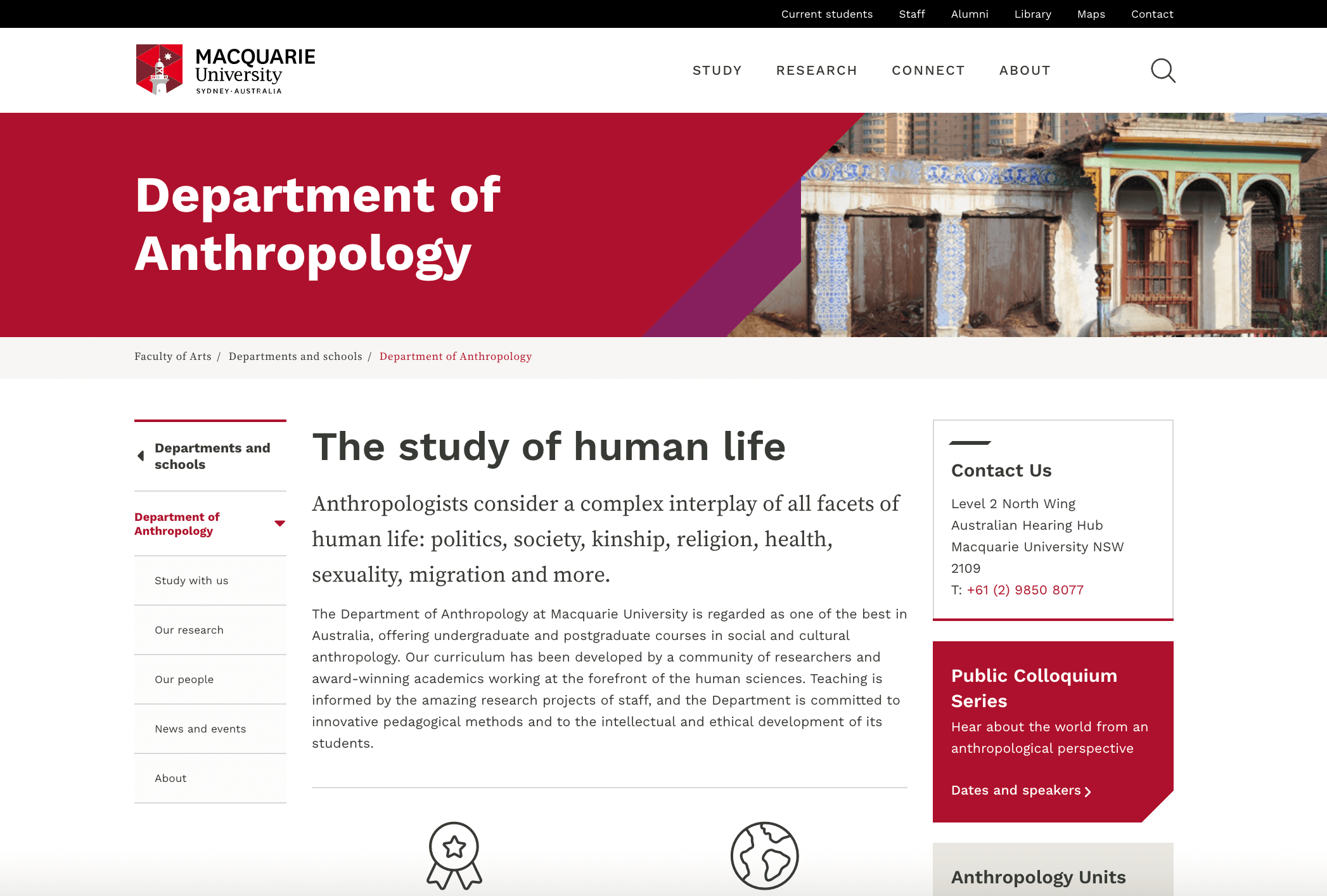
Real examples showing how those building blocks become meaningful pages.
Guidelines
A shared approach to content, design, accessibility and interaction.
Principles
A philosophy for making better decisions, not simply following instructions. The result was a system that could create consistency without creating sameness. Explore GEM
Designing for the people who design
The most important user of a design system isn't always the person visiting the website. Sometimes it's the person building the page. GEM was designed around that reality. A content author shouldn't need to understand interaction design to create a good experience. A developer shouldn't have to interpret a different visual language every time they build a component. A designer shouldn't have to solve the same structural problem for the hundredth time. So we moved complexity into the system. The system became the expert.It carried the knowledge, decisions and patterns that teams could draw from. That freed people to focus their attention on the things that couldn't be systemised: the audience, the content, the context and the problem.
Consistency became a UX feature
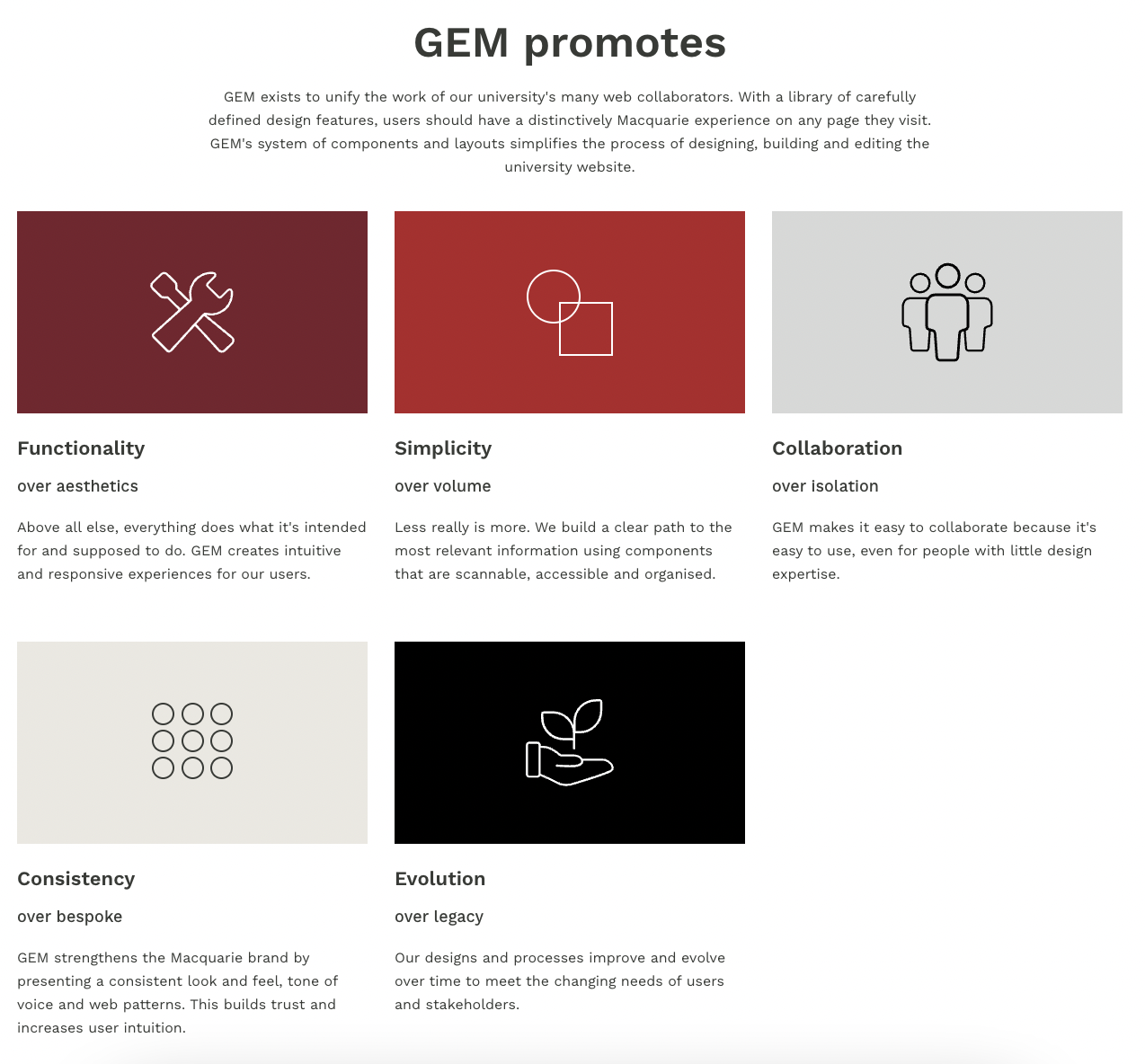
Consistency is often treated as a brand exercise. We saw it differently. When people encounter familiar patterns, they don't have to relearn the interface every time they move between pages. They can recognise. Predict. Navigate. Trust. GEM's consistency therefore wasn't about making every page look the same. It was about making the experience feel knowable. Macquarie's own principles capture this beautifully: functionality over aesthetics, simplicity over volume, collaboration over isolation, consistency over bespoke, and evolution over legacy. Those aren't simply design principles. They're behavioural principles for an organisation.
ACCESSIBILITY BY DEFAULT
Another opportunity was to move accessibility upstream. Instead of asking every individual team to remember accessibility requirements, the system could carry much of that knowledge for them. Accessible patterns.Clearer structures.Considered interaction.Responsive behaviour.Scannable content. The ambition was simple: make the accessible choice the easy choice. That is one of the quiet powers of a mature design system. It doesn't just make good design available. It makes good design repeatable.
DESIGNING FOR EVOLUTION
A system like this can never really be finished. The university changes. Technology changes. People change. Expectations change. So GEM was deliberately designed as something that could evolve rather than become another piece of digital legacy. New patterns could emerge. Existing ones could improve. Teams could learn from one another. The system could respond to what was happening in the real world. Because the measure of a design system isn't how complete it is on launch day. It's how well it continues to serve people years later.
THE OUTCOME
GEM transformed the role of the design system from a repository of UI components into an organisational capability. It gave Macquarie: A shared language so teams could design together. A shared foundation so people didn't have to start from scratch. A shared standard so quality wasn't dependent on who happened to build the page. A shared direction so the digital experience could evolve as one ecosystem.And perhaps most importantly: permission to stop reinventing.
REFLECTION
The real design was largely invisible. It was the decision-making framework underneath the interface. The shared language. The behaviours. The governance. The patterns. The confidence to build without starting over. Because ultimately, a design system isn't really a collection of things. It's a way to help an organisation make better things together.
And perhaps that's the more interesting question for any large organisation:
What would become possible if good design wasn't something you had to ask for — but something the system helped you create?

Deliverables
Design system · Component library · GEMplates · Design guidelines · Content guidelines · Accessibility principles · Brand identity · Iconography · Responsive web patterns
Macquarie University
Education
2022
